
Archify: one sentence to an interactive diagram
An agent skill that turns one sentence into a single HTML diagram you can click through and trace paths in
- Who
- An open-source agent skill by tt-a1i, for anyone who has to explain a system or a plan with a picture
- When
- The repository opened in April 2026; the latest release is v3.2.0, on October 19, 2026
- Where
- Claude Code, Codex CLI, Cursor and OpenCode, running locally on Node.js 18 or later; the result is an HTML file you open in a browser
What was hard
Explaining a system or a plan to someone takes a picture, and every picture meant placing boxes one by one and wiring up arrows. The result was a flat image, so a question like "just show me the cache-miss path" meant drawing it again.
What it does about it
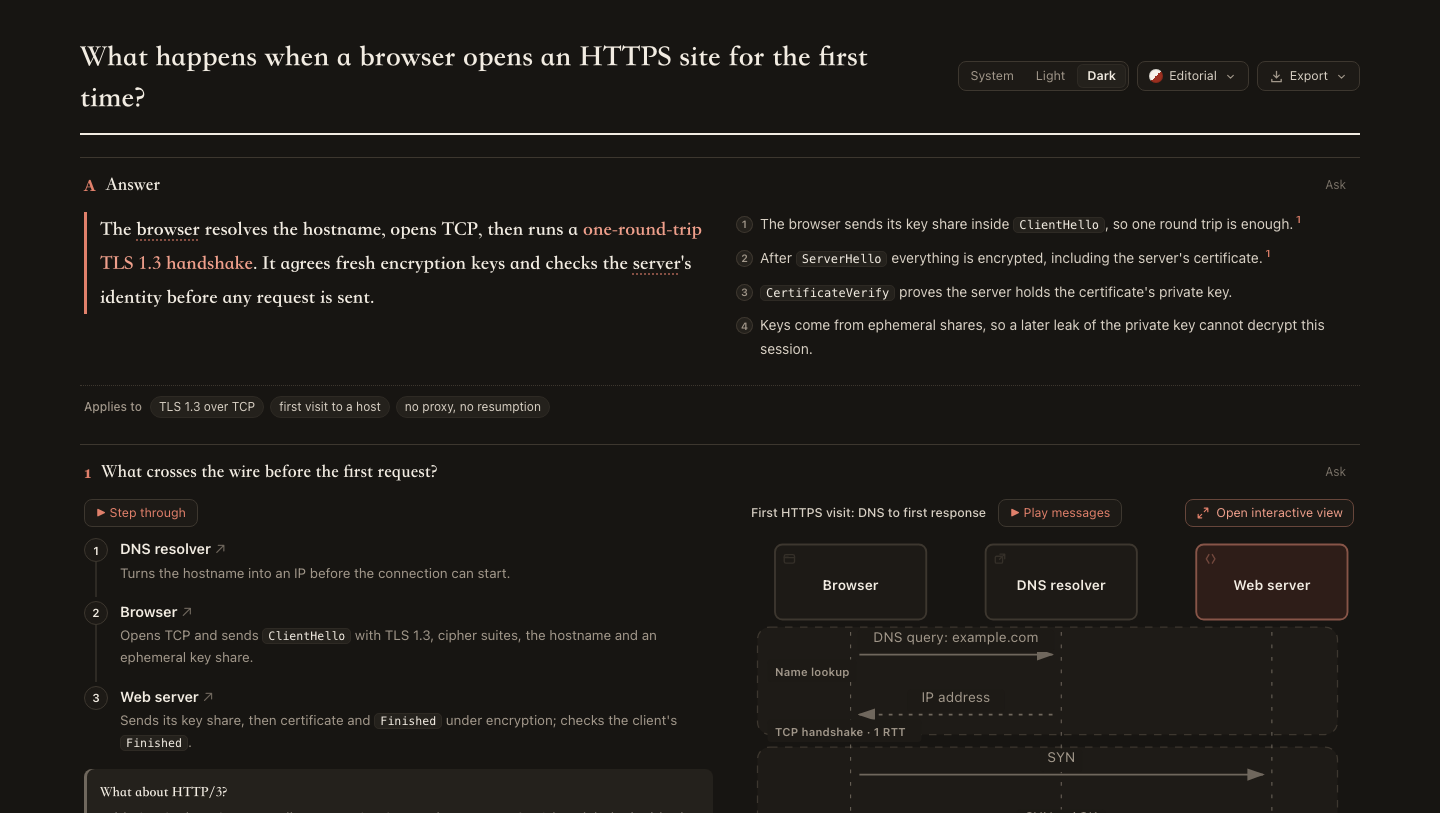
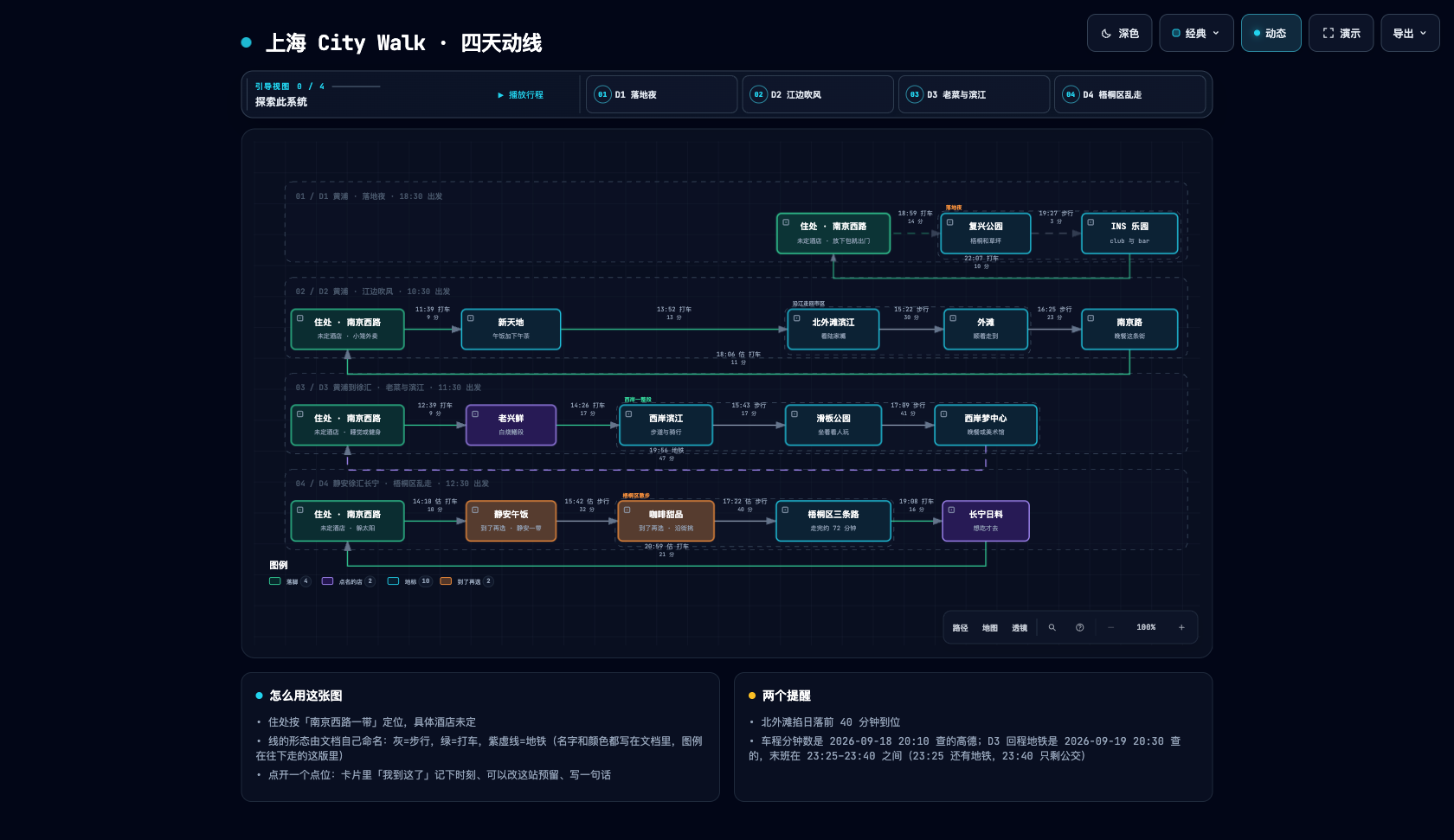
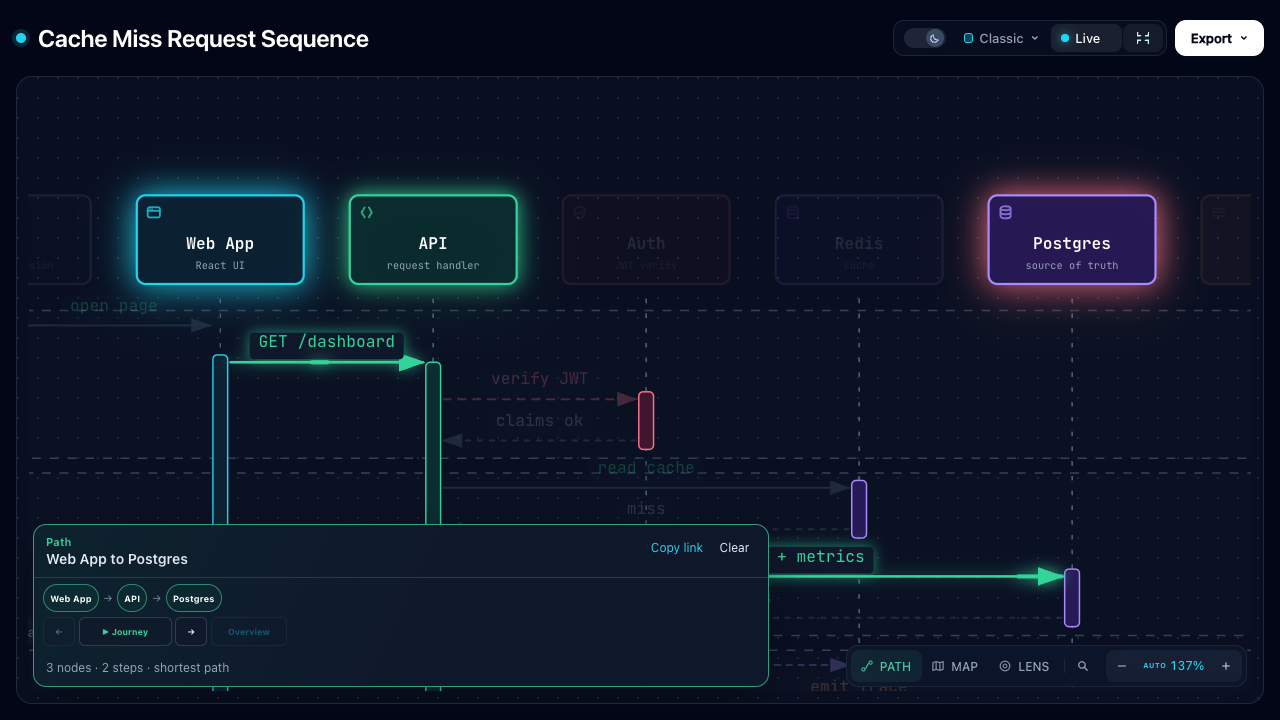
Archify takes a description you give your agent and hands back the diagram as one HTML file. The key idea: the agent doesn't draw the picture, it writes typed JSON, and only a result that passes validation and a real browser check becomes the file. In that file you click a node to follow what lies upstream or downstream, highlight the route between two points, switch themes or export an image. Then you keep refining it in chat, with requests like "add authentication".
What people made with it
They had an agent (WorkBuddy, DeepSeek) go through a video on civil-service careers and got a workflow of its three routes, one lane each.
是参考一个介绍编制的视频 针对他的视频让ai跑了一下 包含图表,方便以后查看
From this one sentence in Gemini Chat they got an architecture map of Guts, a local assistant built on a Python router with Ollama and Llama 3, and shared the HTML with its validation receipt.
Map a privacy-first local AI assistant using a Python router to manage context, with Ollama handling local Llama 3 inference.
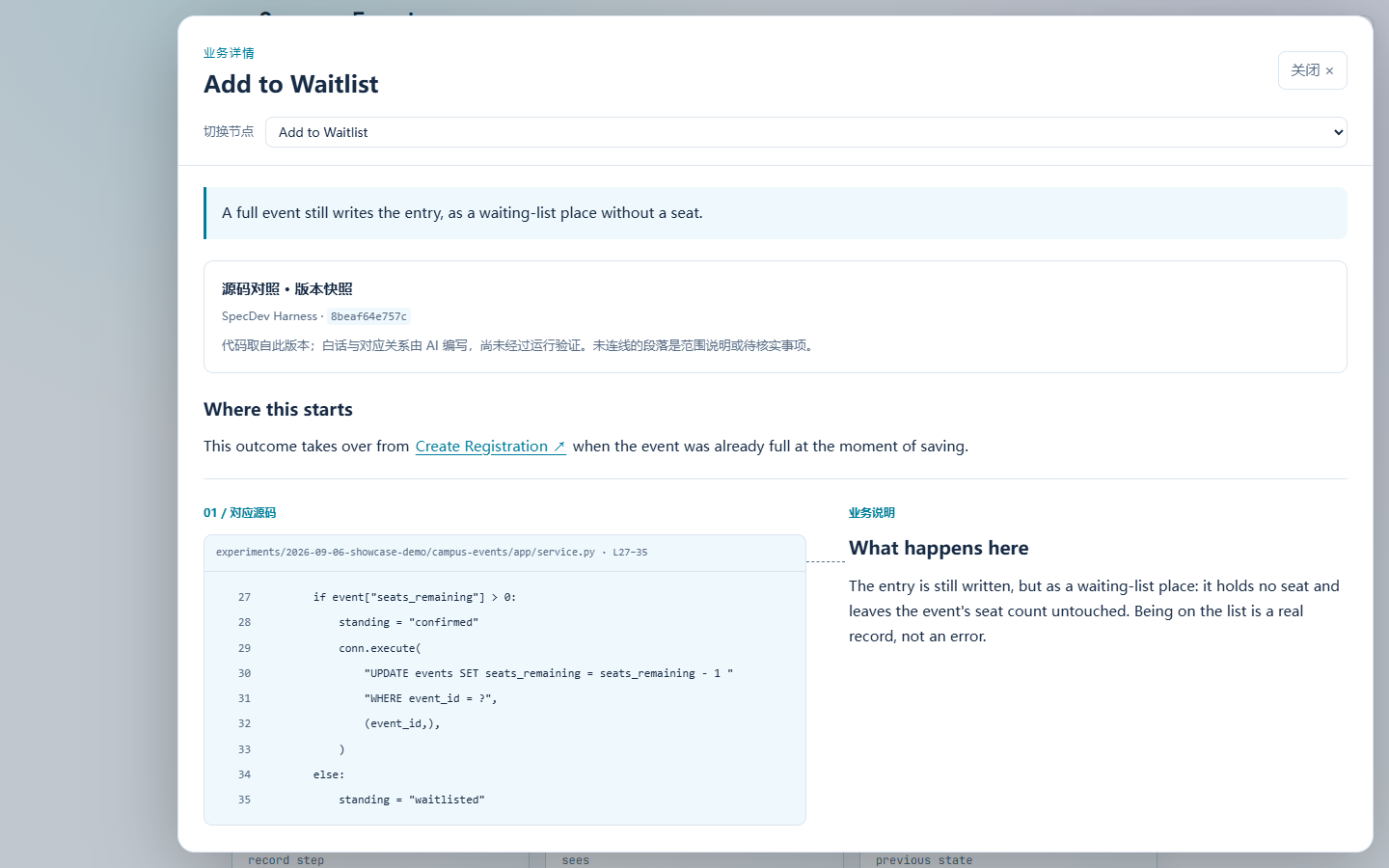
A student drew a workflow for a made-up campus event sign-up system with Codex, then added a reading layer that explains each node in plain words next to its source lines.
a small reading layer that sits on top of an Archify diagram and explains every node in plain language, paired with the exact source lines behind it
How it runs inside
- 1
You → Claude Code · Codex
One sentence, like "diagram a web request"It starts from a description, Mermaid, or a request to read a repositoryarchify/SKILL.md - 2
Claude Code · Codex → archify/SKILL.md
One of 10 types, with its schema and exampleThe agent picks a type from the Type router table and reads that type's schema and examplearchify/SKILL.md - 3
Claude Code · Codex → candidate.json
JSON in .archify/<type>-<slug>-<time>/Instead of drawing coordinates, it writes nodes, relations and labels as schema-checked JSONarchify/schemas/architecture.schema.json - 4
candidate.json → archify.mjs finalize
finalize <type> candidate.json --quality showcaseRuns validate, deliver, check and browser-check in turn, stopping at the first that failsarchify/bin/finalize.mjs - 5
archify.mjs finalize → Claude Code · Codex
On failure, rule codes and supportedFixesIt returns what failed and why as JSON; the agent repairs and reruns, at most two roundsarchify/renderers/shared/diagnostics.mjs - 6
archify.mjs finalize → <slug>.html
Only passing HTML replaces the fileA candidate replaces the output only after it passes; on failure the last good file staysarchify/renderers/shared/atomic-output.mjs
What goes in, what comes out
Is it for you
Good for
- Getting the shape of a repository you just inherited on one page
- Showing your team a flow like an API call or a cache miss
- Turning a database schema into an ERD with every column and key
- Laying out a plan with steps, like a trip or a study plan
- Sharing an answer as one page that leads with the conclusion
Not for
- Automatic Mermaid parsing, general-purpose auto-layout, hosted sharing and WYSIWYG editing are outside its current scope
- Timeline and Waterfall examples use illustrative data; treat times as real only when they come from logs or traces
- Uploaded to Claude.ai as a zip it needs Node.js in the sandbox; as Project Knowledge it falls back to prompt-only architecture diagrams
- It is not for dashboards
Reviewed by Devalley’s editor before publishing. How the column is made