
caveman: makes coding agents say less and read less
Your agent answers like a caveman: the same React fix drops from 63 tokens to 20
- Who
- Julius Brussee started it as a joke in April 2026, for anyone spending a lot of tokens on long agent replies and long tool output.
- When
- The repository opened on April 4, 2026. The latest release is 4.1.0, from November 8.
- Where
- Mac, Linux, Windows; Claude Code, Codex, Gemini CLI, OpenCode and 30+ more agents. Runs locally on your keys or Claude Pro/Max login.
What was hard
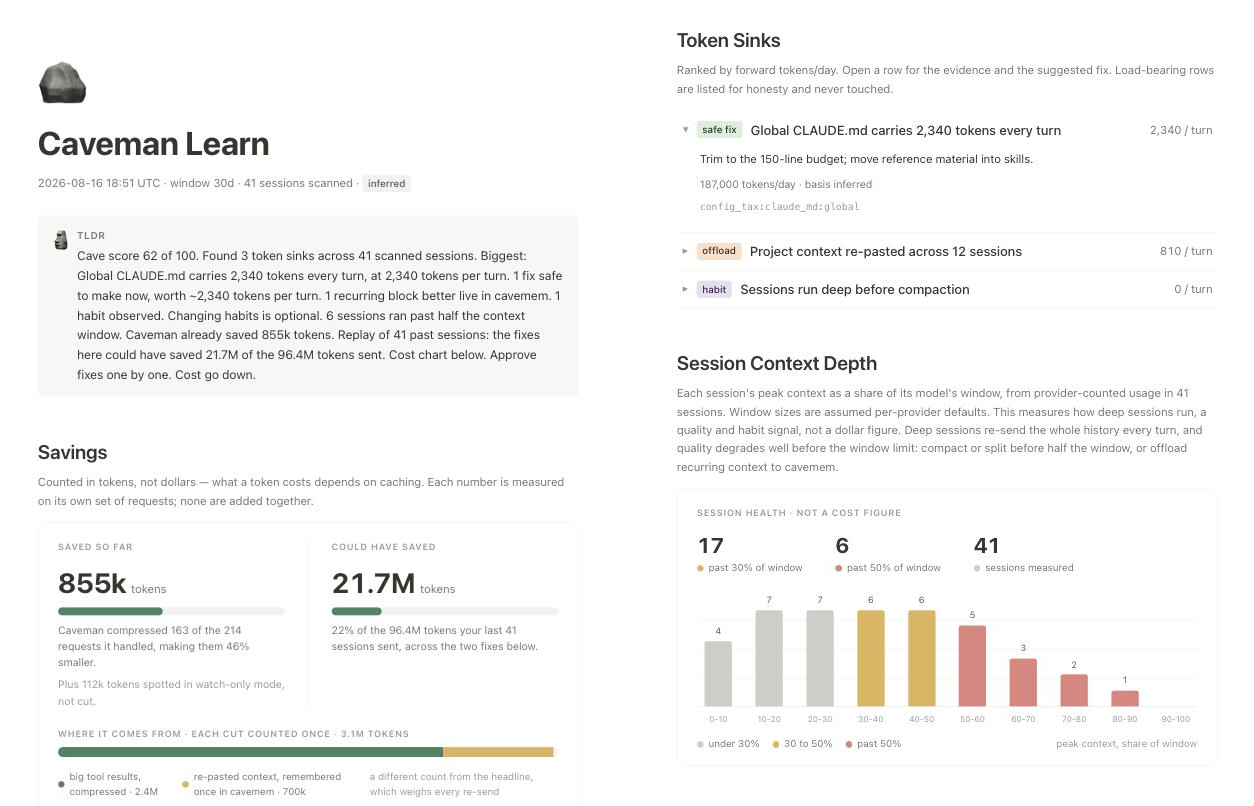
Ask an agent about one bug and the one-line cause comes back wrapped in a greeting, an explanation and a recap. When it reads test output or logs, tens of thousands of tokens go straight to the model, and the same work eats your limit faster.
What it does about it
caveman cuts in two places. Replies lead with the answer, one idea per sentence, while code, paths, error text and words like not stay exactly as they are. The logs, JSON, CSV and test output the agent reads are shrunk by a proxy on your machine before they reach the model; the originals stay on disk, and the agent can pull them back any time.
What people made with it

Rebuilt the caveman approach as elastic-caveman, an Agent Skill for Elasticsearch, and measured how far response tokens fell in live MCP scenarios.
The findings: 63.6% average token reduction, 817 tokens saved, and zero loss of technical accuracy.
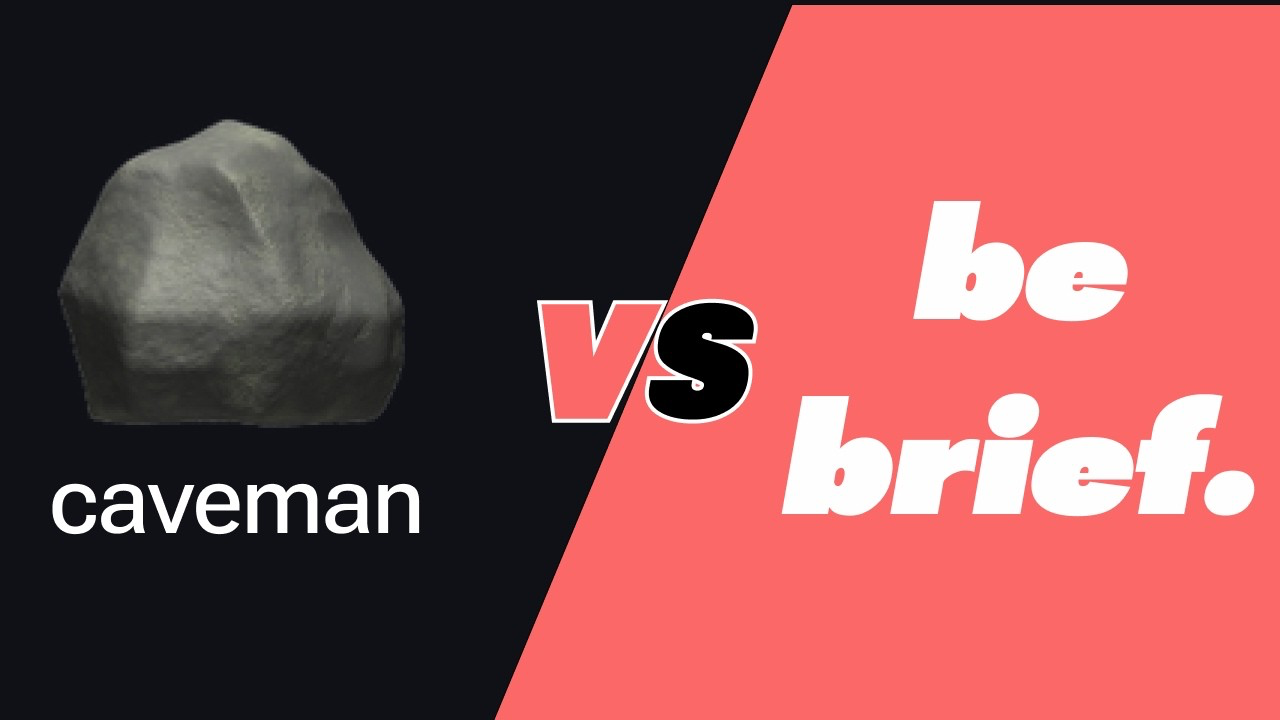
Ran 24 prompts through claude -p, three caveman levels against 'Be brief.' On April's version both matched; its value was consistent structure and a mid-session dial.
The two-word prompt matched it on tokens and quality.
A Spatie developer used caveman in daily coding and found token savings of about 5-20% depending on the task, most useful on small, familiar tasks.
Yes. But not as much as I expected or wanted to.
How it runs inside
- 1
You → caveman CLI
npx @caveman-ai/cli@latestOne screen shows the agents and logins it found and what setup will do; nothing is written before you continue.packages/cli/src/modules/onboard.ts - 2
caveman CLI → Claude Code
ANTHROPIC_BASE_URL set to the local proxyClaude Code is wired by an environment variable that redirects its requests; the skill goes into ~/.claude/skills.agents/profiles/claude.json - 3
caveman SKILL.md → Claude Code
Answer first; code, paths, errors verbatimNo greeting or recap, one idea per sentence; security warnings and irreversible steps get full sentences again.plugins/caveman/skills/caveman/SKILL.md - 4
Claude Code → caveman local proxy
Logs, JSON, test output in tool_resultThe proxy picks only the tool results in the live, not-yet-cached part of the request as candidates to shrink.proxy/providers/anthropic/content_compress.go - 5
caveman local proxy → Short replies, fewer tokens
A request shrunk by per-format compressorsLogs, JSON and tables each have their own compressor; per the README one CSV file goes from 28,041 tokens to 314.engine/compressors/log.go - 6
caveman CLI → Short replies, fewer tokens
caveman statsTokens and cost the proxy recorded, grouped by days, model and agent, in an offline HTML report.packages/cli/src/stats-cli.ts
What goes in, what comes out
Is it for you
Good for
- Your plan limit or API bill drains fast and agent replies feel long
- Work where the agent reads a lot of logs, CSV or test output
- Mixing Claude Code, Codex and Gemini CLI and setting them up once
- Small, familiar tasks where you would rather read the code than the explanation
Not for
- Per the README, beyond 'be concise' /caveman cuts 3% more at the median, /ultracave 35%; the rules cost ~1,160 input tokens. Copilot users save nothing.
- HTML has no compressor yet, so sessions used 9.9% more tokens; the session runs are from August 2026 on an older engine.
- The CLI sends usage stats by default (token counts, install ID, OS, IP), never prompts or code; DO_NOT_TRACK=1 turns it off.
- Apache-2.0: companies may use, change and host it. 'Caveman' and the rock logo are Julius Brussee's trademarks.
Reviewed by Devalley’s editor before publishing. How the column is made