
product_design_dongh: from a plan to a screen spec
A Claude Code plugin that turns one line of an idea into a flow map, a screen spec, design drafts and a QA sheet
- Who
- Released under MIT by dongdongdongdongding, as a kit for planners, PMs and designers.
- When
- The repository opened on October 30, 2026, the same day as version 1.3.0 (plan breakdown, draft comparison, design system).
- Where
- A plugin for Claude Code 2.1.275 or later, also installable as skills in Codex and claude.ai. Builds run locally on Python and Node.
What was hard
Every round of admin-system work meant writing the same thing four times: in the feature spec, the screen spec, the design tool and the QA sheet. Then they drift. A feature ID never reaches the screen spec, an error message in the design differs from the doc, and one exception is missing from the test scenarios.
What it does about it
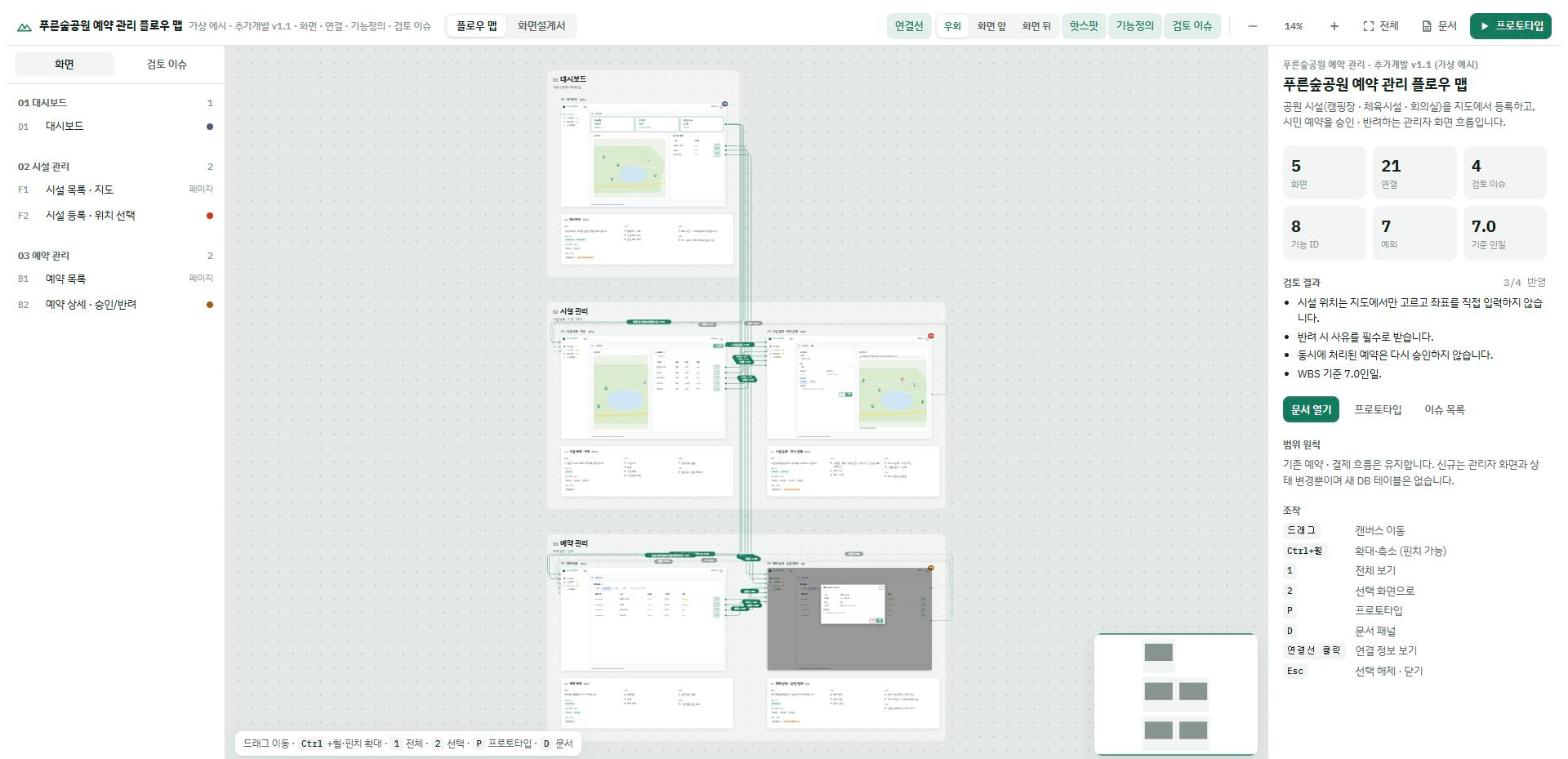
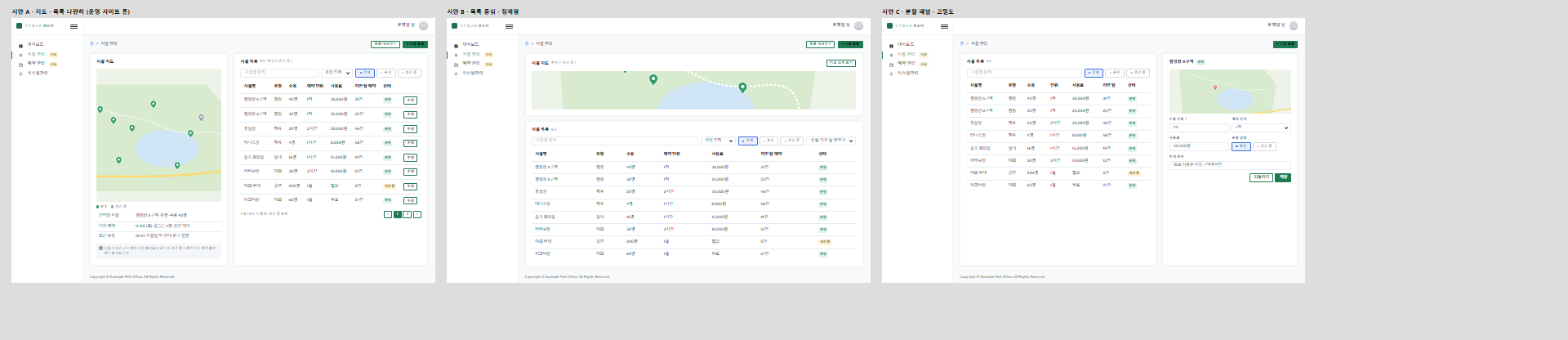
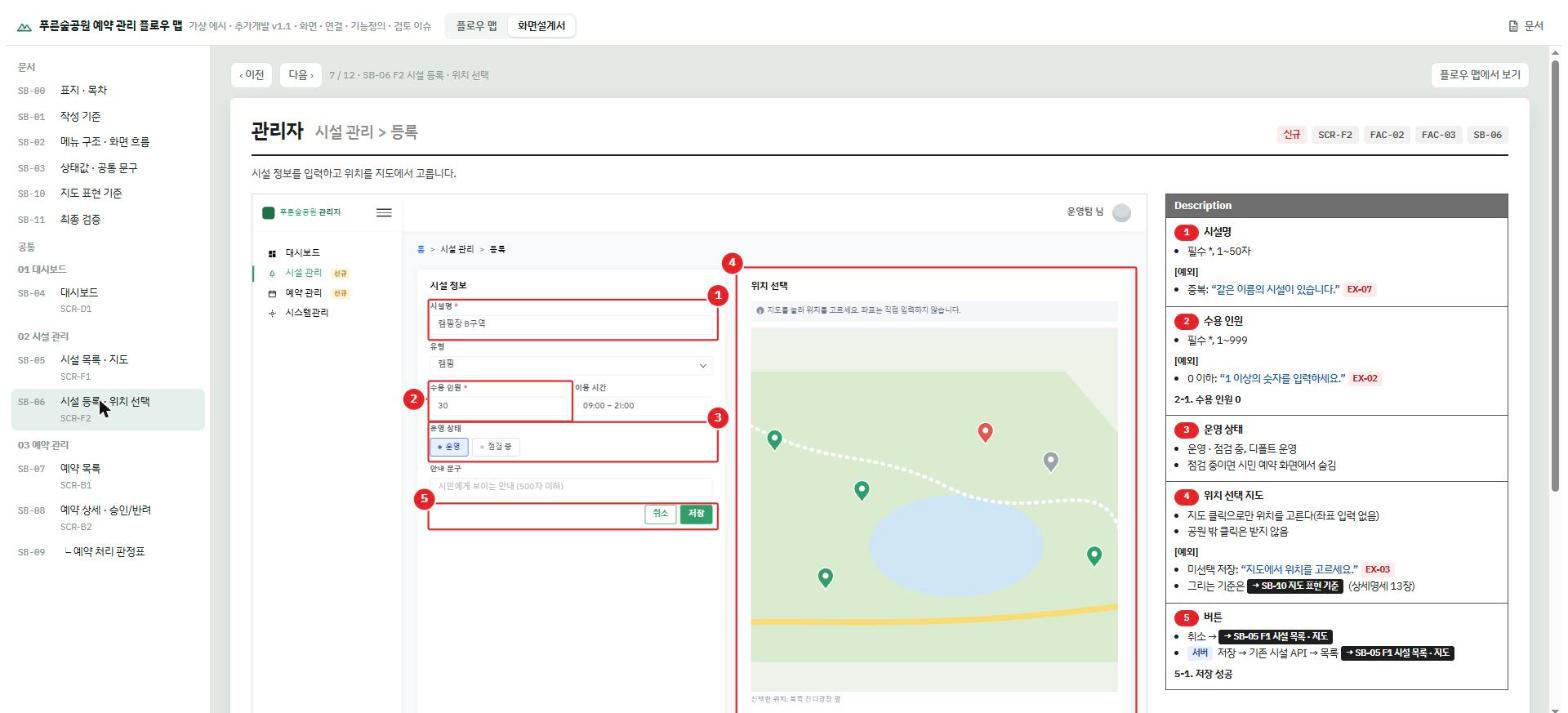
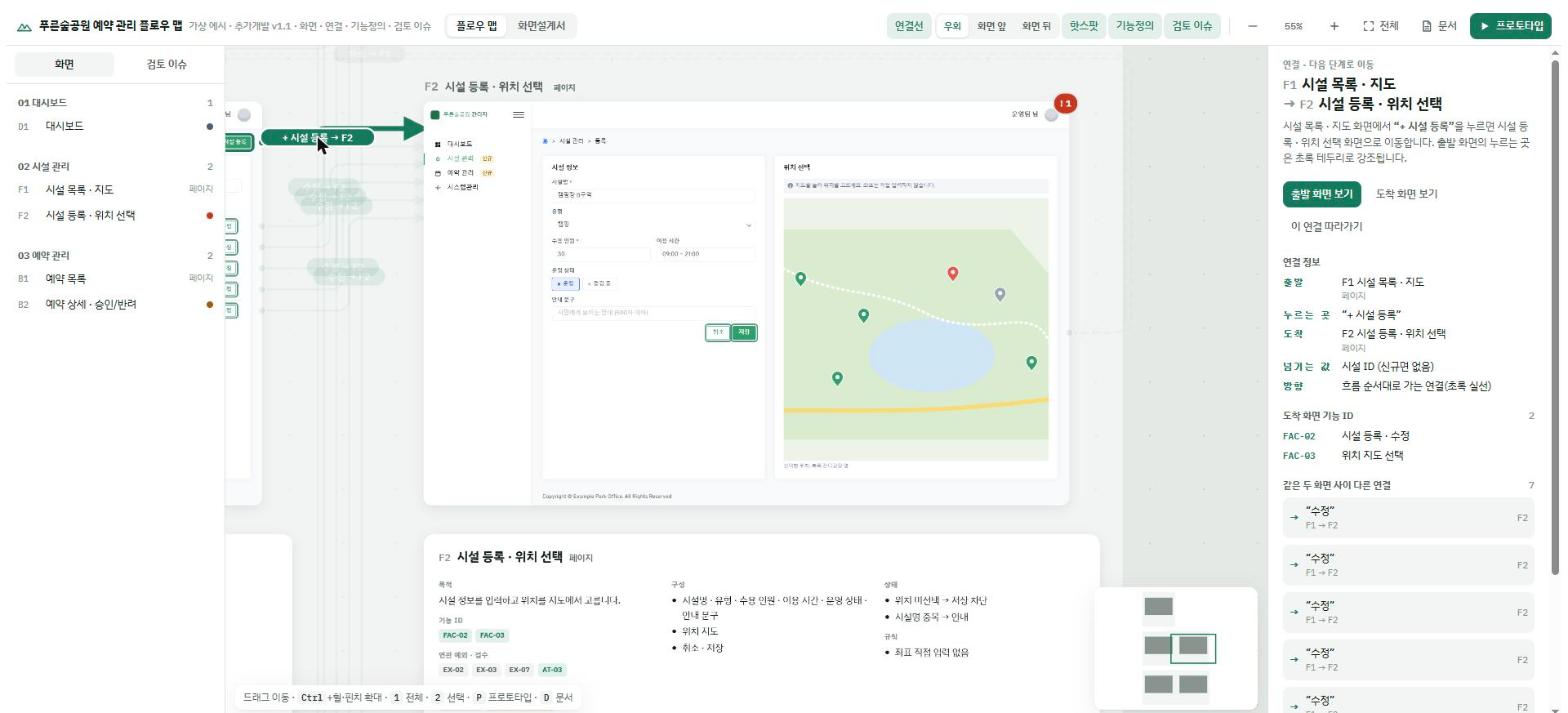
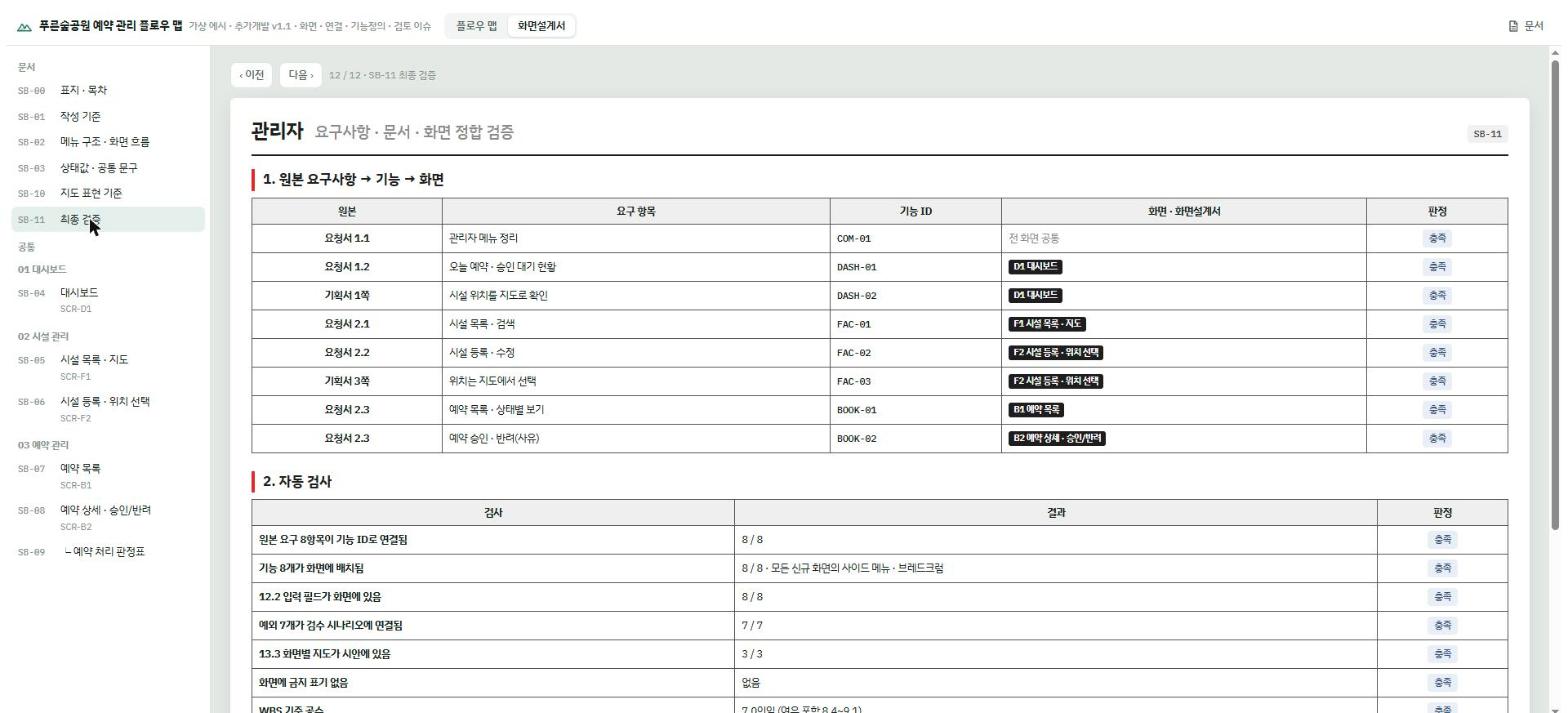
The source is three Markdown docs (feature spec, detailed spec, WBS) plus a single file of screen drafts, and the flow map, screen spec and design boards are all built from that data. Screens are drawn in HTML rather than pasted as screenshots, so pointing at a label like "capacity" is enough for a red numbered marker to find its place, and the links between screens are pulled from the targets written on each button. At the end a table traces each requirement to a feature ID and a screen, and anything missing shows up as "needs checking".
How it runs inside
- 1
Planner → Claude Code · screen-spec-kit
/product_design_dongh:start + a plan or an ideaIt picks the working folder, and if an idea follows the arguments it goes straight to breaking the plan down.commands/start.md - 2
Claude Code · screen-spec-kit → spec-kit docs · project.js
research/기획분해.md → three docs · project.jsOne sheet, from roles and menus down to screens, features, links and exceptions, becomes the source of the specs.skills/plan-decompose/SKILL.md - 3
spec-kit docs · project.js → Claude Design canvas
export_design.mjs → one .dc.html board per screenExports draft, screen and design-system boards, turning each data-go button into a link that works on the canvas.scripts/export_design.mjs - 4
Claude Design canvas → spec-kit docs · project.js
import_design.mjs --apply → design-import/Brings back boards a person edited on the canvas; later builds and exports use them ahead of the original drafts.scripts/import_design.mjs - 5
spec-kit docs · project.js → build_kit.py
kit.json · theme.css · project.js · sb-pages.js · docsIf the counts of features, exceptions and tests read from the docs differ from kit.json's expect, the build stops.scripts/build_kit.py - 6
build_kit.py → flowmap.html
flow map + screen spec + docs panelFills the shared engine template with the project files, its interface in the language kit.json's lang names.scripts/build_kit.py - 7
Claude Code · screen-spec-kit → flowmap.html
audits/flowmap-sb.js → clipped, overlapping, uncheckedOn the flow map served from 127.0.0.1 it counts overlapping or clipped markers and the open items in the final check.scripts/audits/flowmap-sb.js
What goes in, what comes out
Is it for you
Good for
- Planners who owe a screen spec for the next round of admin-system work
- Projects that expect the Korean public-sector screen spec format: red markers, descriptions, verdict tables
- Getting from a one-line idea to a list of menus, screens and features quickly
- Teams whose feature spec, screen spec and QA sheet keep drifting apart
- Deliverables in English, Chinese or Japanese
Not for
- The automatic audit needs Claude in Chrome, and publishing needs the Artifact tool (per the README).
- In Codex it shows results as a local server address and files instead of a browser audit and Artifact links.
- Opened as file:// some features are blocked, so it is served locally.
- It handles no passwords or keys; you sign in to a live site yourself.
Reviewed by Devalley’s editor before publishing. How the column is made