
Mesh Avatar Studio: one illustration into a moving 2D avatar
A team running its in-app character on this runtime asked for glasses, sent the code, and it was merged within a day.
- Who
- Made by shinshin86, with guides in English, Japanese and Chinese.
- When
- The repository opened on October 4, 2026; the mesh-avatar runtime 0.4.0 came out on October 28.
- Where
- Node.js 22.17+ with Claude Code or Codex. The editor and Live run on your machine; the Player runs in Chrome or Edge with no install.
What was hard
A 2D avatar that talks and blinks is usually made by splitting the drawing into parts, eyes, inner mouth, hair, neck, and rigging each by hand. With nothing but one illustration, it was hard to know where to begin.
What it does about it
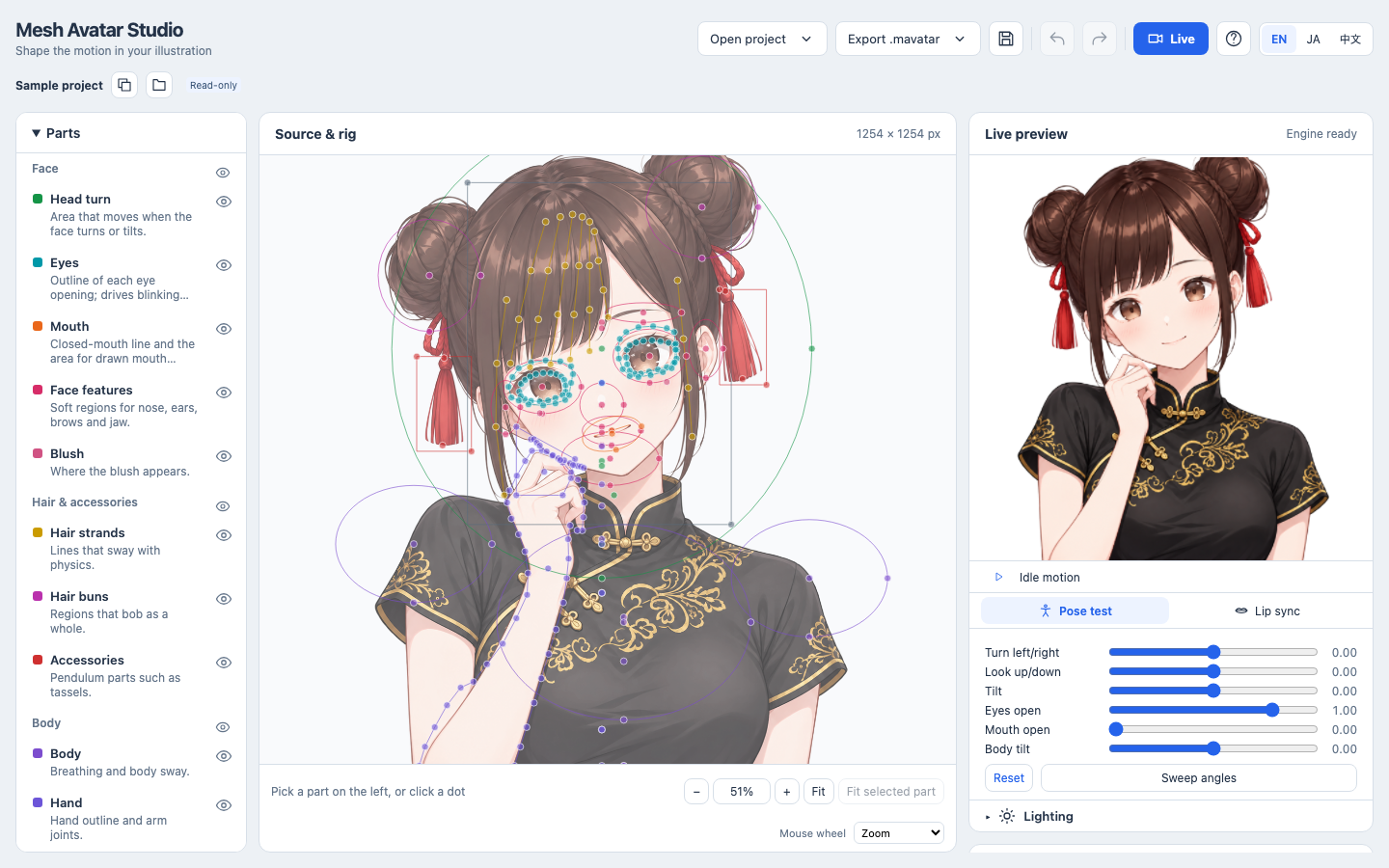
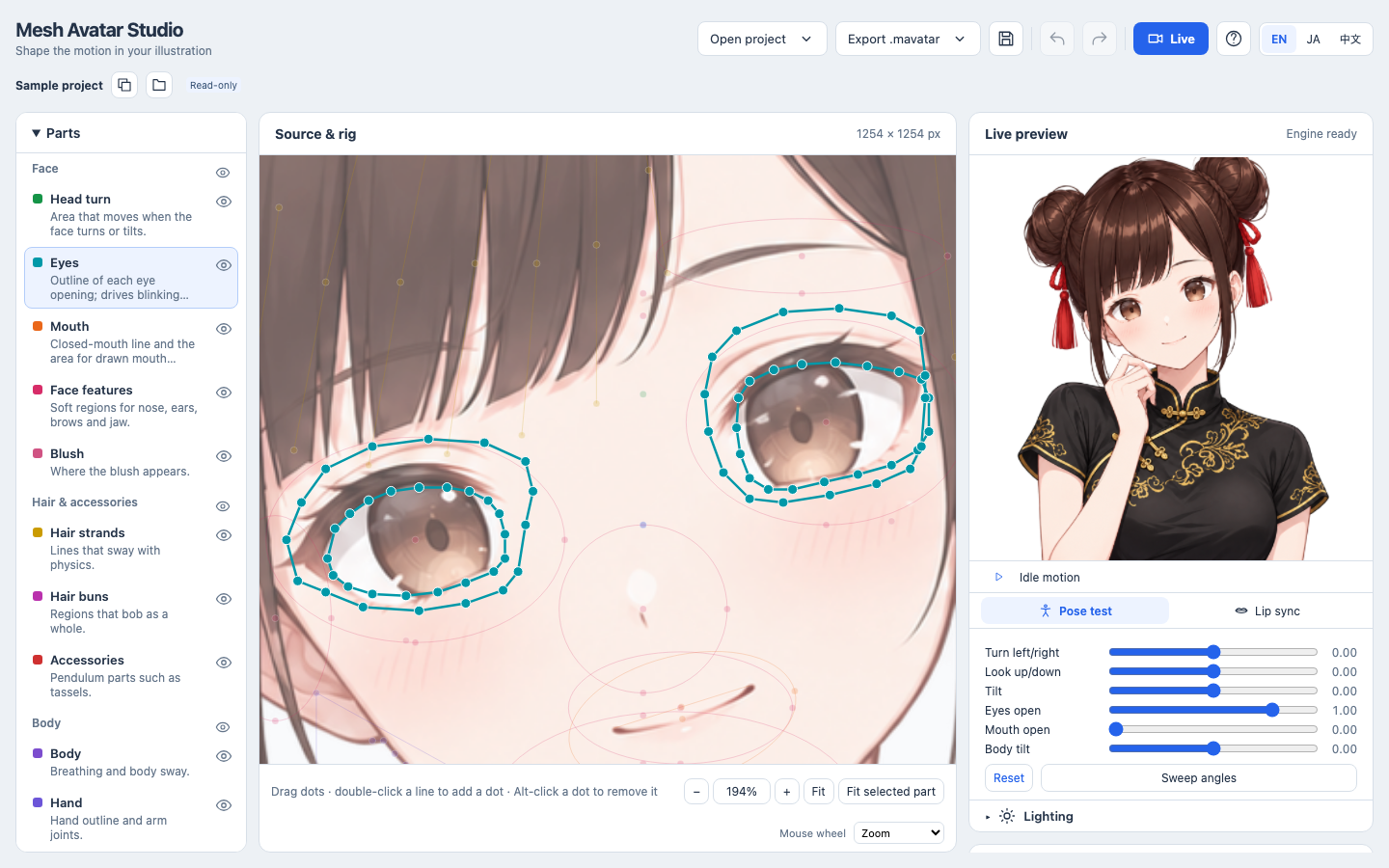
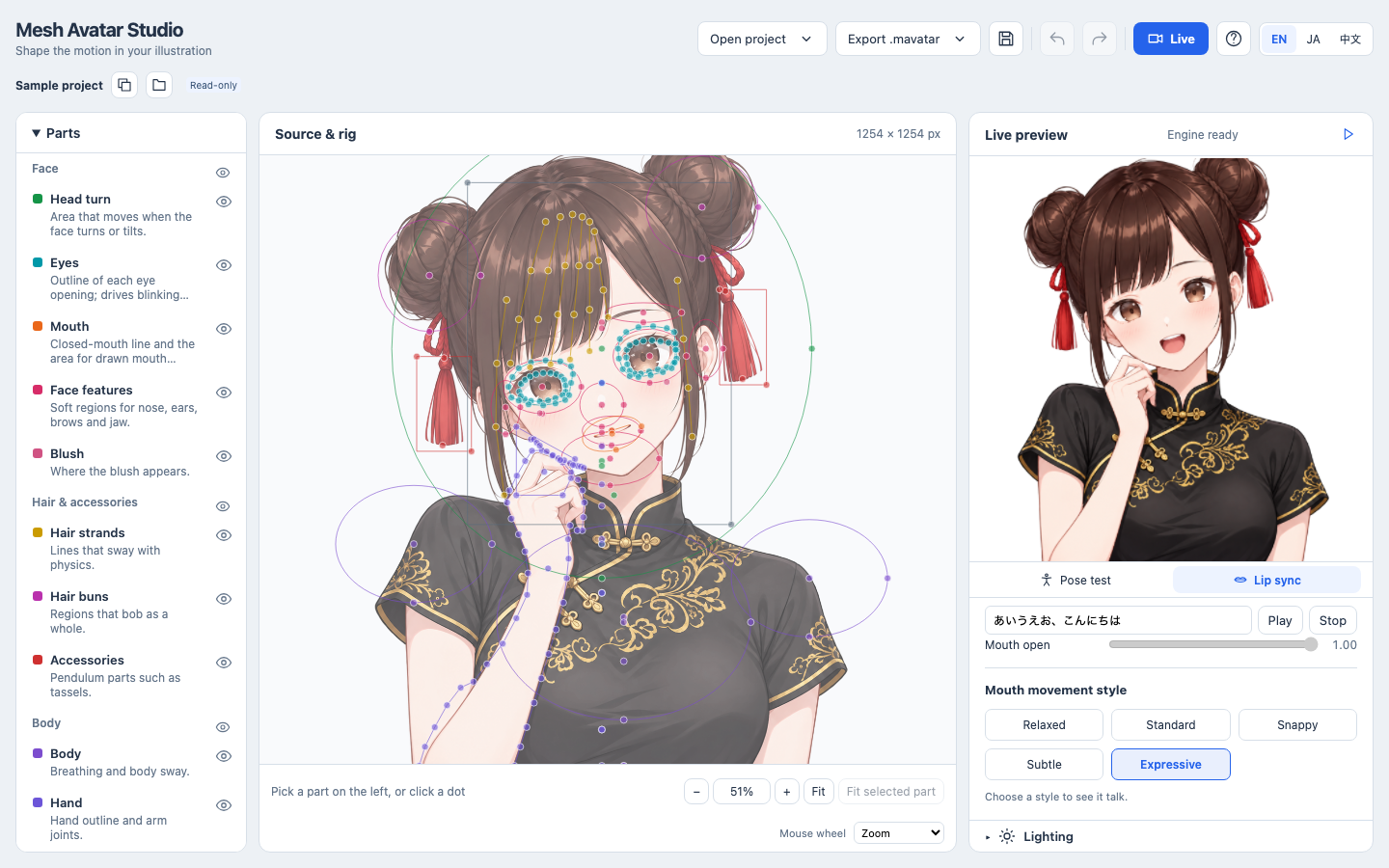
Mesh Avatar Studio hands that rigging to a coding agent. Following the repository's guide, the agent reads eye, mouth and hair coordinates from zoomed grids, builds the rig, cuts the image into layers and renders fixed poses to check and correct its own work. Whatever still looks off, you drag into place in the editor while the preview follows.
What people made with it
A team using the runtime to show a character in its app proposed overlay layers for items like glasses; its pull request was merged the next day.
We use the runtime (currently 0.3.0) to show a character in an app
Rigging an avatar called Stella with the tool alongside someone who built a VTuber by hand, they suggested separate layers for eyes, inner mouth and neck.
Happy to test any layering changes against our Stella pilot rig and report back with comparisons.
How it runs inside
- 1
You → Claude Code · Codex
A PNG and a request to follow the guideThe agent first tests how accurately it reads coordinates and reports the score.docs/agent-guide.md - 2
Claude Code · Codex → tools/ scripts
grid.py: a zoomed grid per partNo estimates from the full image: 10 px grids, 5 px for the eyes.tools/grid.py - 3
tools/ scripts → projects/<name>/rig.json
rig.draft.json drawn over the imageFixed until each eye outline follows the eye white within about 2 px.tools/overlay.py - 4
tools/ scripts → projects/<name>/rig.json
build-layers.py: layers and rig.jsonCuts the hair mask and eye layers into built/ and writes the complete rig.json.tools/build-layers.py - 5
tools/ scripts → Claude Code · Codex
render-poses: frames in fixed posesClosed eyes, head turns and an open mouth go to review/; up to three rounds of fixes.tools/render-poses.mjs - 6
projects/<name>/rig.json → Studio editor
npm run dev, then drag the dotsPick a part, drag its dots, and the preview on the right follows at once.src/main.tsx - 7
Studio editor → Live page · OBS
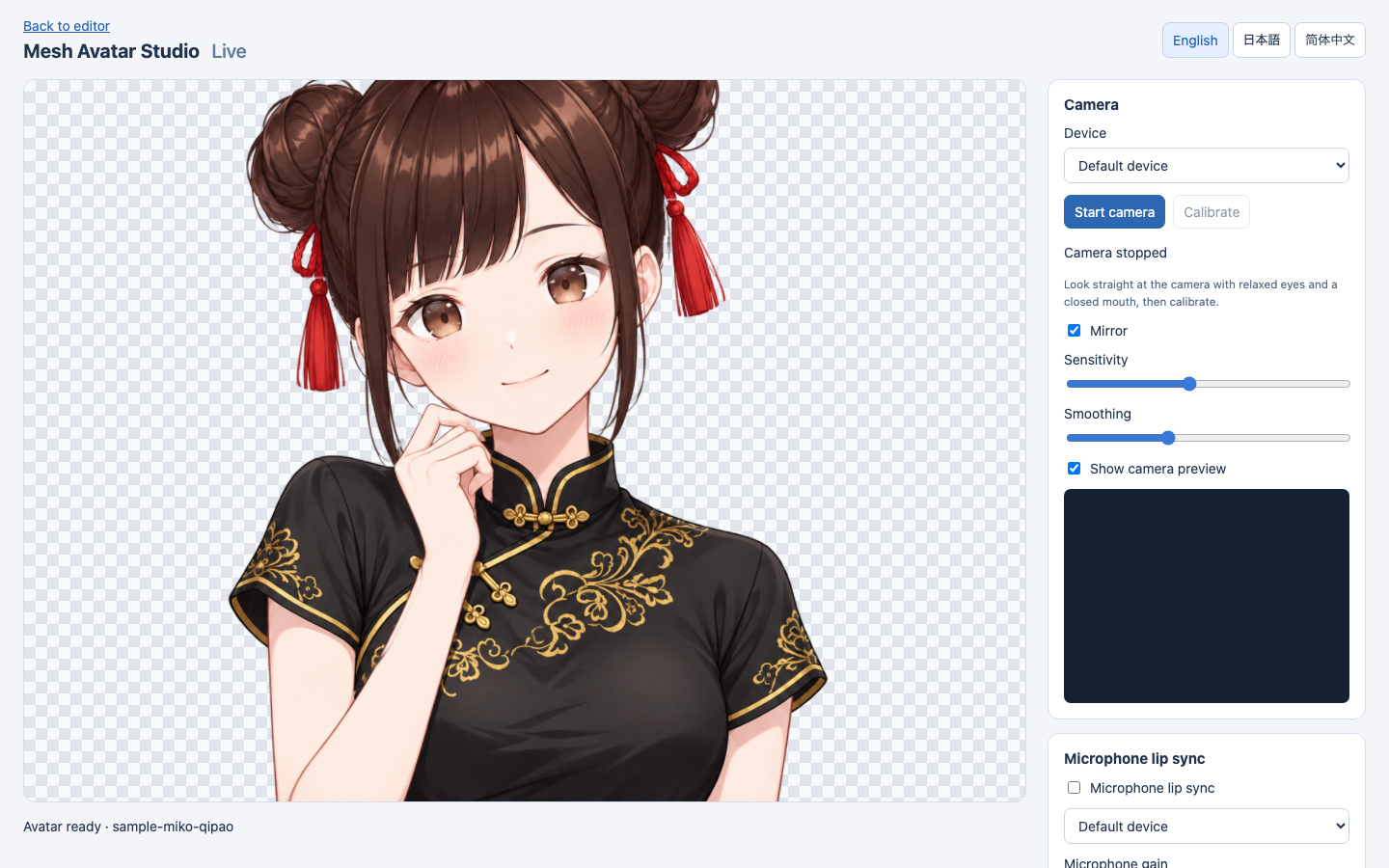
Camera and mic drive it; copy the OBS URLVideo and audio stay on your machine; only motion values reach the stream view.live.html
What goes in, what comes out
Is it for you
Good for
- Making a streaming avatar from a single drawing
- Developers who want a talking character in a web app (custom element, React component)
- Anyone already working with Claude Code or Codex
Not for
- Works best on a front-facing head-and-shoulders PNG; a three-quarter view, hands over the face or hair covering it lower the quality.
- Drawn eyes and mouths come from Codex's image generation, which sends the image to OpenAI; Claude Code can't make images, only the requests.
- The guide recommends a strong vision model such as Claude Opus 5.5 or GPT-6.1 Sol, and a run usually takes tens of minutes.
- The sample character Miko is not under the MIT License; her images follow their own usage guidelines.
Reviewed by Devalley’s editor before publishing. How the column is made